
What is an Employer of Record (EOR)?
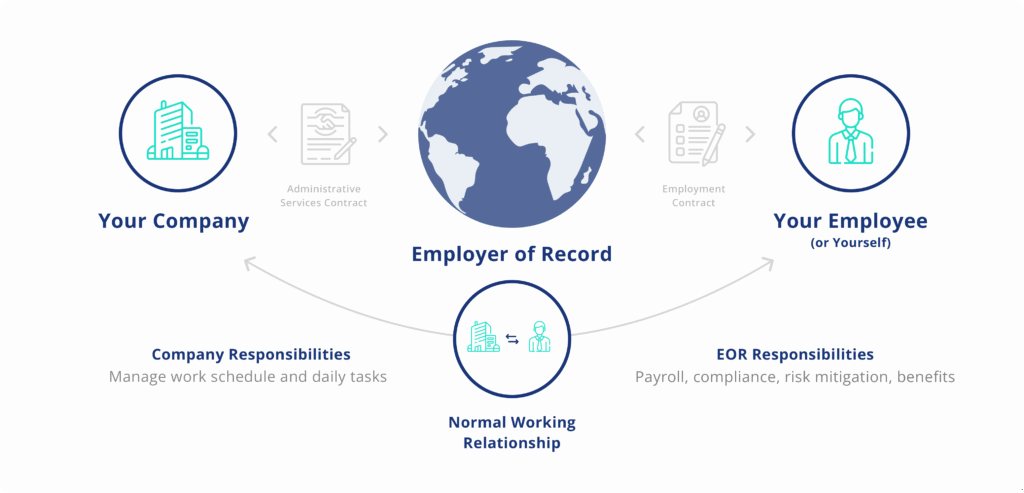
An Employer of Record (EOR) serves as a specialized third-party organization that assumes the legal responsibilities associated with employing individuals on behalf of another company. This outsourcing arrangement allows businesses to hire employees without having to directly deal with the administrative complexities and regulatory challenges involved in employment. The EOR essentially becomes the official employer while the client company maintains control over the employees’ daily functions and activities.
One of the primary functions of an Employer of Record is managing payroll. EORs ensure that employees receive timely payments, handle withholdings such as taxes, and comply with various state and federal labor laws. Additionally, as part of their suite of services, EORs manage employee benefits, which may include health insurance, retirement plans, and paid leave. By leveraging the expertise of an EOR, businesses can provide competitive benefits to their employees without the intricate administrative burden that typically accompanies such offerings.
Moreover, compliance with employment laws is a critical area where EORs excel. They help businesses navigate complex regulations and reduce the risks associated with employment practices. For instance, an EOR is knowledgeable about local labor laws and can assist in ensuring that hiring practices, workplace policies, and employee classifications align with legal standards. This is particularly beneficial for companies that are expanding into new markets or employing remote workers in different regions.
In summary, an Employer of Record offers a practical solution for businesses looking to streamline their employment processes. By outsourcing payroll, benefits administration, and compliance tasks to an EOR, companies can focus on their core operations while mitigating risks associated with employment laws. This collaborative approach not only enhances operational efficiency but also positions businesses to attract and retain talent in a competitive job market.
How EOR Works
Employer of Record (EOR) services offer a streamlined approach to workforce management, particularly beneficial for companies looking to expand their operations without assuming the liabilities associated with direct employment. The process begins when a client company identifies a need for additional workforce and turns to an EOR to facilitate the hiring process. This partnership allows the client to focus on core business activities while delegating human resource functions to the EOR.
The EOR takes on the legal responsibilities of being the official employer. This involves recruiting candidates on behalf of the client, handling onboarding processes, and ensuring compliance with local labor laws. Once candidates are selected, the EOR manages payroll, ensuring timely and accurate wage distribution while taking care of essential tax obligations. This not only alleviates the administrative burden for the client but also mitigates risks related to tax compliance.
In addition to payroll, the EOR administers employee benefits, which might include health insurance, retirement plans, and vacation policies. By pooling multiple employees from various client companies, EORs can often negotiate better rates and advantages that may not be available to smaller businesses. Furthermore, they ensure that all aspects of employment are managed efficiently, including ongoing employee relations and potential separation or termination procedures.
To illustrate how an EOR functions, consider the relationship between the client company, the EOR, and the employee. Suppose a tech startup needs to hire a software developer in a different state. Instead of navigating the complexities of employment laws in that state, the startup engages an EOR. The EOR conducts the hiring, manages wages, and provides the necessary benefits for the developer, while the startup retains full control over the developer’s work and daily responsibilities. This clear division of roles allows the tech startup to scale rapidly while minimizing risk and administrative overhead.
Benefits of Using an EOR Service
Utilizing an Employer of Record (EOR) service provides numerous advantages for businesses looking to streamline operations while ensuring compliance with labor regulations. One of the primary benefits is cost savings. By outsourcing payroll and employment management to an EOR, companies can significantly reduce administrative burdens, potentially lowering overhead costs related to hiring, benefits administration, and human resources. For instance, instead of allocating resources to manage employee contracts, a company can redirect funds toward strategic initiatives that drive growth.
Risk management is another critical advantage of engaging an EOR. The complexities of international labor laws and regulations create a minefield for businesses operating in multiple jurisdictions. EOR services specialize in navigating these intricate legal landscapes, ensuring that employers comply with local employment laws and mitigate the risk of penalties. This proactive approach not only protects the business but enhances its reputation in the marketplace. For example, a company expanding into new countries can rely on EOR expertise to manage tax obligations and employment laws, thereby avoiding potential legal pitfalls.
Furthermore, EOR services are instrumental in ensuring compliance with local labor laws. They help businesses stay updated with changing regulations, which can vary significantly across regions. This compliance alleviates concerns about issues such as wage disputes or misclassification of employees, providing peace of mind to the employer. Most importantly, it enables companies to focus on their core operations without the distraction of legal compliance issues.
Finally, by using an EOR, companies can concentrate on their primary objectives. As administrative tasks concerning employee management are delegated to the EOR, internal teams can hone their efforts on strategic goals and business growth. This prioritization ultimately enhances overall productivity and efficiency, fostering a more conducive work environment.
Cost Savings and Operational Efficiency
Utilizing an Employer of Record (EOR) service presents numerous advantages that directly contribute to significant cost savings and operational efficiency for businesses. One of the primary benefits of engaging an EOR is the reduction of expenses associated with establishing a legal entity in a foreign market. The process of setting up a local branch or subsidiary can involve extensive legal fees, registration costs, and ongoing compliance issues. By utilizing an EOR, companies can enter new markets swiftly without the burden of these substantial costs.
Another area where an EOR can lead to cost savings is in the outsourcing of human resources (HR) functions. An EOR typically manages various HR responsibilities such as payroll processing, benefits administration, and employee compliance, allowing companies to reallocate their internal resources to core business functions. This streamlining not only reduces overhead expenses but also increases operational efficiency by enabling the existing workforce to focus on strategic initiatives rather than administrative tasks.
To illustrate these benefits, consider a mid-sized technology firm looking to expand its operations into Europe. By partnering with an EOR, the firm avoids the lengthy and intricate process of establishing a legal entity abroad, which could take months, if not years. Instead, it can onboard employees within days, consequently accelerating market entry and revenue generation. Additionally, the EOR’s expertise in local labor laws mitigates compliance risks, reducing potential penalties and associated costs.
Ultimately, opting for an EOR can transform operational dynamics, promoting both cost savings and efficiency. This approach not only facilitates seamless market entry but also equips businesses with the necessary support to navigate local regulations effectively. By leveraging the capabilities of an employer of record, companies can enhance their strategic positioning in the competitive landscape.
Legal Compliance and Liability Management
In today’s increasingly complex global workforce, employers face significant challenges in navigating the myriad of employment laws and regulations across various jurisdictions. Engaging an Employer of Record (EOR) can effectively mitigate these challenges, ensuring that businesses adhere to federal, state, and international requirements while minimizing liability risks associated with employee management. By acting as the legal employer, the EOR assumes the burden of compliance with labor laws, tax regulations, and employment contracts, allowing companies to focus more on their core operations.
One of the primary advantages of utilizing an EOR is its expertise in local and international employment legislation. As regulations continuously evolve, keeping up with the legal landscape can be daunting for organizations, particularly those operating in multiple regions. An EOR possesses in-depth knowledge of the legal requirements in the jurisdictions it operates, ensuring that all employee-related obligations, such as payroll taxes, worker’s compensation, and benefits administration, are met timely and accurately. This not only protects companies from potential fines and legal disputes but also fosters a compliant work environment.
Moreover, the existence of an EOR can greatly reduce the risk of misclassification of employees—an area where many organizations face significant liability. The EOR handles contracts and ensures that employees are classified correctly, which is crucial in maintaining compliance with labor regulations. By transferring these responsibilities to an EOR, businesses can avoid the repercussions of improper classification and the associated penalties. In summary, leveraging an Employer of Record service not only simplifies the process of managing a diverse workforce but also reinforces legal compliance, effectively shielding employers from various liability risks in today’s complicated regulatory climate.
Global Expansion Made Easier
In today’s interconnected world, businesses increasingly seek to expand their operations across international borders. However, navigating the complexities of hiring talent in foreign markets can be daunting. This is where an Employer of Record (EOR) service becomes invaluable. By acting as a legal employer for companies looking to hire employees abroad, EOR services allow businesses to hire and engage talent without the need to establish a local entity. This not only streamlines the hiring process but also significantly lowers the barriers to entry in new markets.
The traditional approach to international hiring often involves complicated legal procedures, understanding local labor laws, and creating a corporate presence in another country. All these requirements can be time-consuming and resource-intensive, potentially deterring businesses from pursuing global expansion. An EOR simplifies this process by handling compliance and administrative responsibilities, allowing companies to focus on their core operations while confidently hiring talent from various locations.
Additionally, EOR services help mitigate potential risks associated with international employment. Local labor regulations can be complex and vary significantly from one country to another. Businesses may inadvertently breach employment laws, leading to potential fines or legal issues. EOR providers are knowledgeable about local employment regulations, ensuring compliance and reducing the risk of costly penalties. They also manage employee benefits, payroll, and tax obligations, which are essential components of employing international talent.
Ultimately, EOR services offer a practical solution for organizations looking to scale globally, providing them with the agility and confidence needed to tap into diverse talent pools while minimizing operational risks. This not only facilitates growth but also enhances a company’s competitive edge in the global market.
Flexibility and Scalability in Workforce Management
In the dynamic landscape of modern business, flexibility and scalability are critical components for success, especially when it comes to managing workforce demands. An Employer of Record (EOR) offers businesses a unique solution to achieve these objectives effectively. By serving as the legal employer for workers, EORs enable businesses to adapt swiftly to changing market conditions and operational requirements. This adaptability is particularly beneficial for companies that experience seasonal fluctuations or are entering new markets.
The ability to scale operations up or down seamlessly is one of the hallmark advantages of utilizing an EOR. Organizations can hire employees or contractors quickly without the burdensome process of establishing a local entity in a new region. This streamlining of the hiring process allows businesses to respond rapidly to increased demand or project-specific needs. For instance, if an organization secures a large project requiring additional staff, an EOR can facilitate the hiring process, allowing the business to focus on core operations rather than administrative concerns.
Furthermore, EOR services provide businesses the freedom to manage fluctuating workforce demands by allowing for flexible employment arrangements. Organizations can offer part-time, temporary, or project-based positions more easily through an EOR, thereby optimizing labor costs while maintaining workforce efficiency. This flexibility also extends to international operations; companies can hire employees in different countries without navigating complex local employment laws and regulatory requirements, as the EOR handles compliance on their behalf. By leveraging the expertise of an Employer of Record, businesses can enjoy the agility to pivot as needed, ensuring they remain competitive in the ever-evolving marketplace.
Enhanced Employee Experience and Benefits
The concept of an Employer of Record (EOR) has gained traction in recent years, particularly for businesses seeking to enhance their employee offerings. Operating as a dedicated intermediary, an EOR assumes responsibility for payroll, benefits, and compliance, while allowing companies to focus on their core operations. This approach not only streamlines administrative functions but significantly enhances the overall employee experience.
One of the standout advantages of using an EOR is the competitive benefits package often provided to employees. EORs typically offer a comprehensive suite of employee benefits, including health insurance, retirement plans, paid time off, and various wellness initiatives. By partnering with an EOR, companies can offer attractive benefit options that align with industry standards, helping to foster a positive workplace culture. This is especially critical in today’s labor market, where top talent is in high demand and seeking attractive employment options.
The presence of a strong benefits program facilitated by an EOR can lead to increased job satisfaction among employees. When workers feel valued and supported through robust benefits, their morale often reflects positively on organizational effectiveness. Moreover, a well-rounded employee experience can drive higher levels of engagement, translating into improved productivity and job performance. Such engagement not only enhances individual employee satisfaction but can also contribute to reduced turnover rates, which is crucial for maintaining a skilled workforce.
Furthermore, the support offered by an EOR extends beyond just benefits. Employees often have access to dedicated resources that assist in their professional development, ensuring they remain competitive in their fields. This additional support reinforces the employer’s commitment to personal and professional growth, solidifying an employee’s sense of belonging and motivation within the organization.
Choosing the Right EOR Provider
Selecting an appropriate Employer of Record (EOR) provider is a crucial step for businesses looking to expand or streamline their workforce management. With many options available, several key factors should be considered to ensure the choice aligns with the company’s needs and objectives.
Firstly, evaluating the provider’s experience is essential. Look for an EOR with a proven track record in your industry. Experienced providers are familiar with the nuances specific to your sector, which can make a significant difference in compliance and operational efficiency. Industry expertise not only aids in minimizing risks associated with foreign labor laws and regulations but can also lead to better service outcomes.
In addition to experience, scrutinize the service offerings of potential EOR partners. A comprehensive suite of services, including payroll processing, tax compliance, immigration assistance, and benefits management, is critical for supporting your business operations. It’s important to ascertain whether the EOR can handle your specific needs and scale alongside your growth.
Customer support also plays a vital role in choosing an EOR provider. Reliable customer service can significantly enhance your experience, especially when navigating complex employment laws or addressing payroll-related inquiries. Assess the accessibility and responsiveness of the EOR’s support team, as well as any available resources or technology that facilitate communication and problem-solving.
Finally, consider seeking testimonials or case studies from other clients to gauge the satisfaction levels and reliability of the EOR provider. The credibility of these references can provide insights into the potential partnership’s quality and fit for your organization. By carefully evaluating these factors, businesses can select an EOR partner that aligns with their requirements and supports their strategic goals.